Space Strats
Build a battlefield worth fighting over. Inside an Unreal Engine tactical prototype where creating the arena is part of the experience.
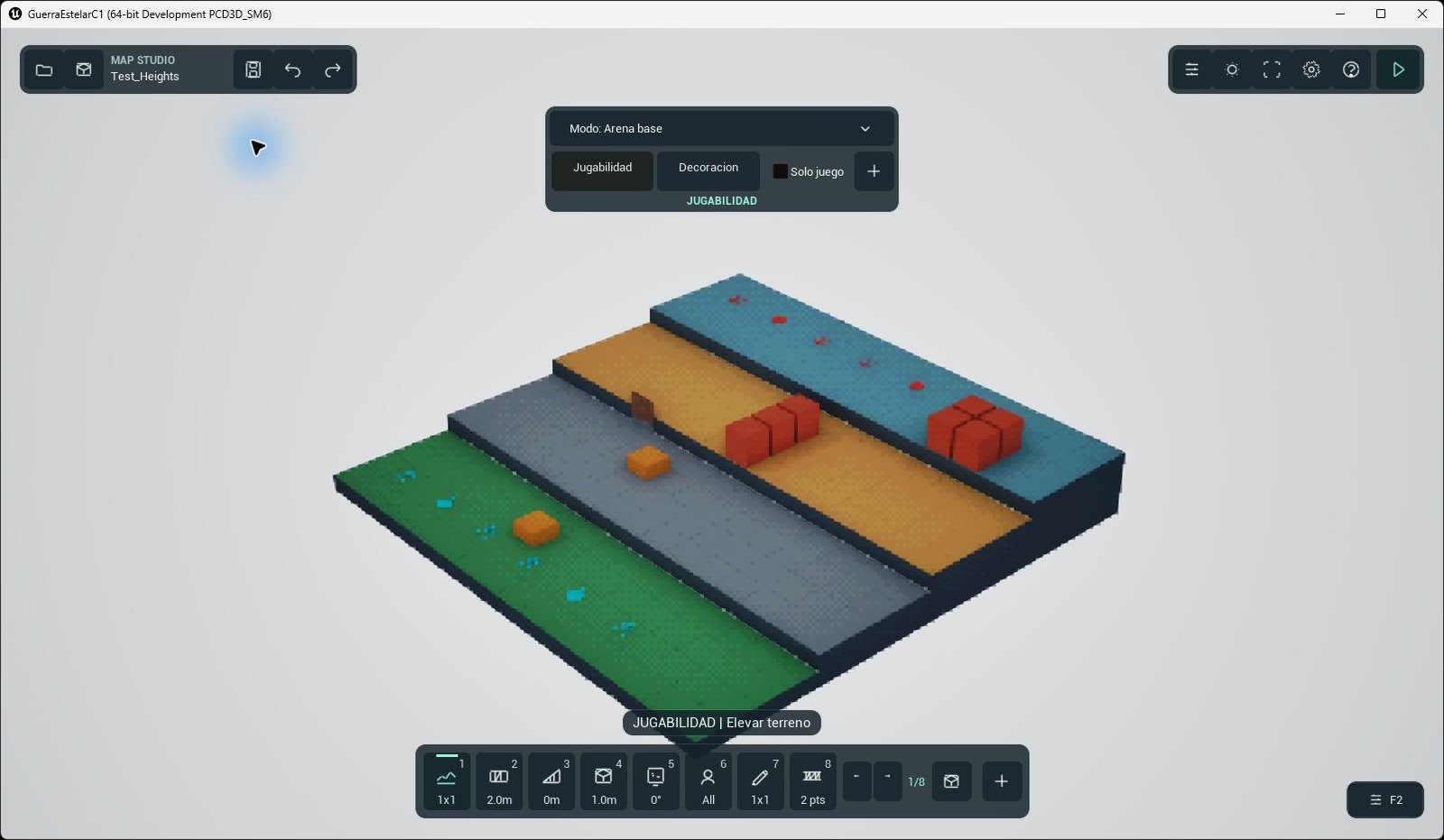
The arena editor running in Unreal Engine. Height, ground materials and cover are visible in this test map. Real prototype capture, September 2026; art and interface are still in development.
Build a battlefield worth fighting over
Space Strats is a tactical game in development with a playable arena-building tool at its heart. We are a three-person team exploring a simple idea: making the battlefield should be satisfying enough to become a reason to play in its own right.
Raise a platform. Shape a route up to it. Add cover, build a reusable piece, and give the space a mood with lamps, neon and water. Then examine what those choices mean for movement and combat. A small change to a lane can become the start of a very different arena.
The prototype combines 3D modular construction, a square tactical grid and an evolving pixel-art presentation. Its editor, object workshop and separate combat test scene are working today. This is an early development project, with placeholder models and an art direction still being explored.
Choose your tour
| What interests you? | Start here |
|---|---|
| I want to build things. | Shape an arena → Make your own reusable objects |
| Show me the look and feel. | Lights, atmosphere and flowing water → The feel of the editor |
| How does it become a game? | Tactical testing → The current milestone and next steps |
A small piece can become a whole visual language
The object workshop lets a creator name and save a construction, then bring it back through a searchable library. A favorite barrier or illuminated prop can become a recurring element across an arena. Placed copies travel with the saved map, so changing the library later does not silently rebuild an existing level.
That freedom comes with a useful distinction: gameplay pieces define the tactical space; decoration supplies its character. A custom object can contain both. The editor’s gameplay-only view reveals which pieces actually matter to movement, cover and visibility.
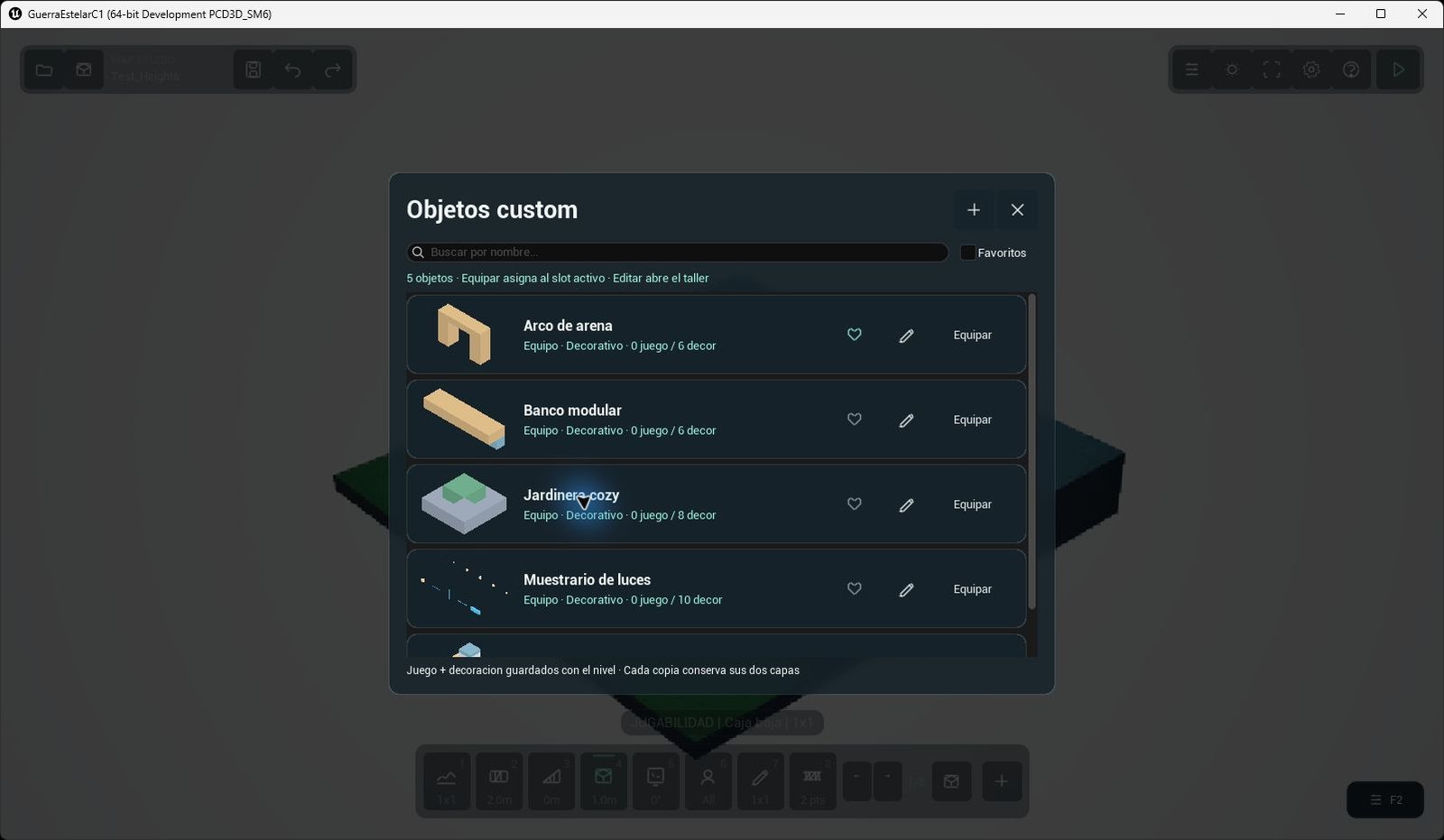
The current object library: reusable forms, thumbnails, favorites and an entry point to the workshop. These are simple construction examples, not finished environment art.
Follow the project in six phases
These chapters are a guided tour of the current build. Their order explains the systems, rather than assigning invented dates to their development.
| Phase | Development story | What to look for |
|---|---|---|
| 01 · Foundations | Building arenas | Terrain, wedges, bridges and cover that can be tested as rules. |
| 02 · Creative freedom | Reusable objects | Fine construction, saved objects and two clear layers. |
| 03 · A sense of place | Atmosphere, lighting and fluids | Sun direction, weather, editable lights and bounded waterfalls. |
| 04 · One more edit | Editor feel | Radial tools, paged hotbars, feedback and camera controls. |
| 05 · Tactical meaning | Testing the arena | Movement previews, combat foundations and mode-specific authoring. |
| 06 · Production | What this milestone proves | Validation, collaboration and the questions for the next build. |
From construction to tactical decisions
The combat prototype can already show reachable space and the action-point cost of a move. Its underlying systems include attacks, cover, line of sight, turns, overwatch, support and recovery. The development challenge is to turn those foundations into encounters that make people want to try another layout.
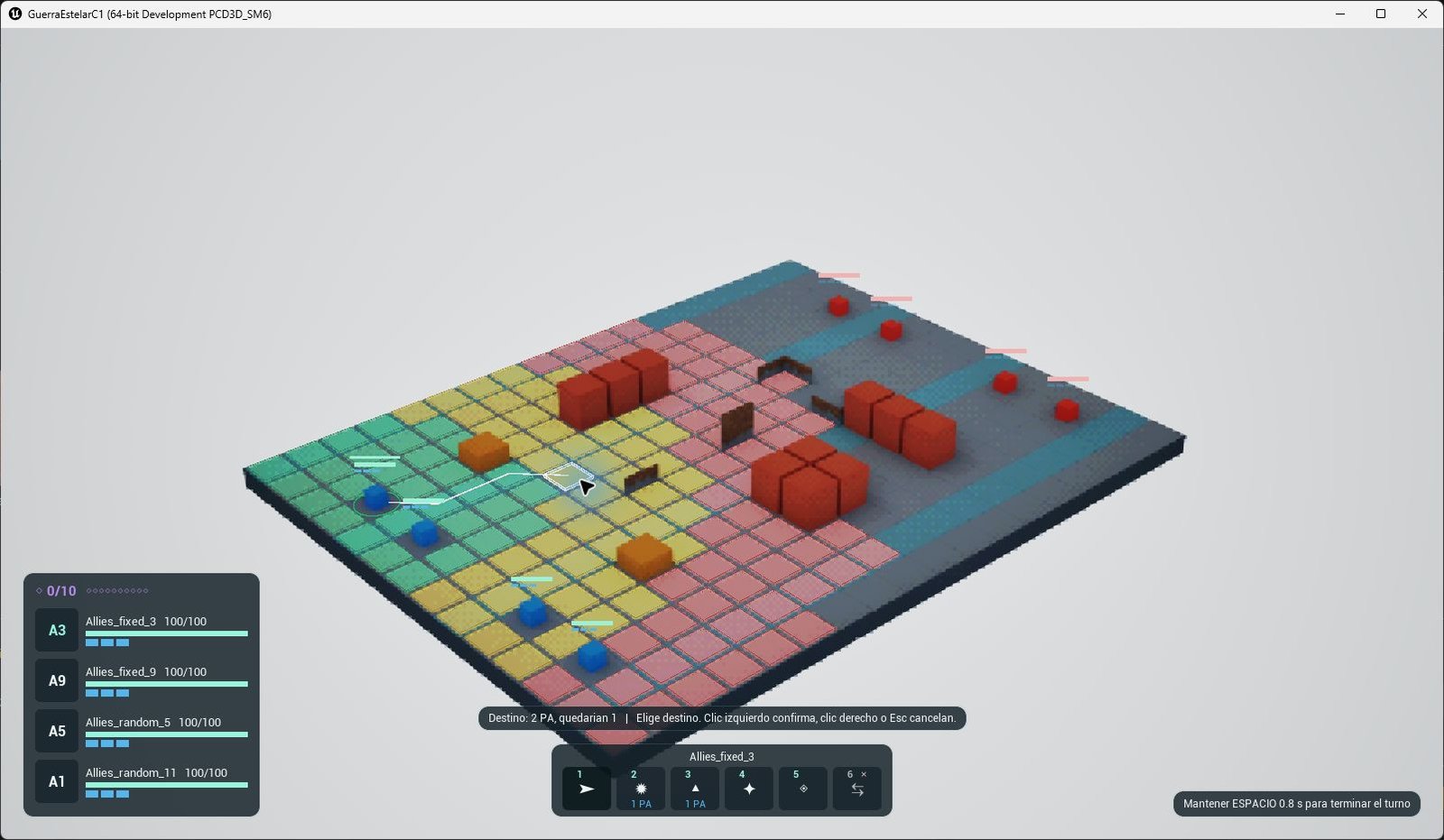
A movement preview in the separate combat test scene. The route and action-point cost appear before confirmation. Colored blocks stand in for units and obstacles.
Current milestone
Working now: map saving and loading, terrain and cover editing, custom-object libraries, gameplay/decorative layers, editable lighting, visual fluids, environment controls, camera and post-process profiles, and a tactical test interface.
Still being developed: a cohesive final art direction, a complete game loop and encounter design. Several modes can be authored on one arena, but objective markers are not yet finished King of the Hill or Capture the Flag scoring systems.
The September 27 engineering checkpoint recorded 182 automated checks with no failures, including three checks with known asset warnings. That supports the prototype’s technical foundation; player testing still needs to establish how enjoyable and readable the complete experience is.
Interested in Space Strats?
For players who enjoy shaping places, the ambition is an arena builder with room for personal expression. For publishers and collaborators, the project offers a concrete prototype to discuss: creative tooling, tactical systems and a clear set of questions for the next milestone.
Get in touch through my portfolio or continue with the first development chapter.
This series describes the team’s work. All images on these pages were captured from the Space Strats development project in Unreal Engine on September 27, 2026. Prototype shapes, interface labels and materials are not presented as final art. No reference-game imagery or generated gameplay mockups are used.