Space Strats Devlog 03: Atmosphere Without Losing the Board
How Space Strats adds time, weather, lights, and fluids while preserving tactical data.
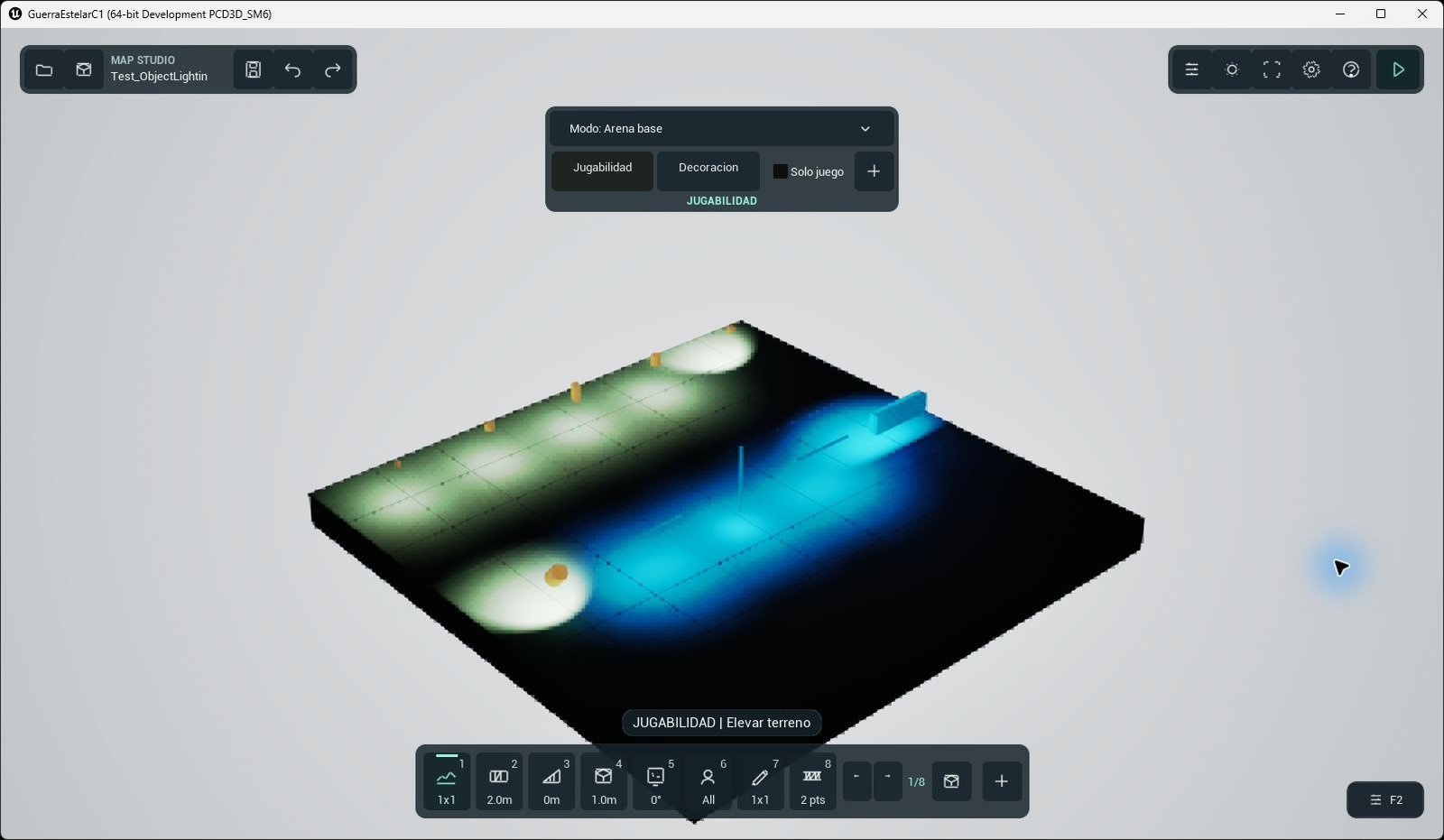
A lighting test map compares warm lamps with cyan neon. This is a fixture for tuning light types, not a finished environment. Captured in Unreal Engine, September 27, 2026; prototype art.
Project overview · Phase 03 / 06
Start with the same arena in a new mood
Take the checkpoint from the previous chapter and set its map environment to a low sun with fog. The terrain, cover, and combat state stay the same while the space feels colder and more exposed. Space Strats saves time of day, sun direction, and weather with the map; changing the environment does not reset combat. Theme, terrain material, and weather remain separate choices so one layout can support several visual studies.
Give lamps useful limits
The lighting catalog has ten lamp presets: small and large bulbs, hanging lamps, lanterns, spotlights, projectors, horizontal and vertical neon, floor neon, and panels. A creator can edit color, intensity, radius, neon length, and cone settings where the shape supports them. Those controls make a checkpoint readable at night without turning lighting into a gameplay rule.
The budgets are explicit: 128 luminaires per map, 32 per template, and 256 total pieces in a template. Only the 16 enabled emitters nearest the camera provide real illumination at once. The others retain their emissive mesh, so they do not simply disappear when the camera moves. There are no dynamic shadows or physical occlusion guarantees, and lights never block movement, change tactical visibility, or deal damage.
Explore the pixel treatment
Developer visuals can apply presets such as Pixel limpio, Retro colores, Dither, or Tinta, then expose their settings for adjustment. Pixel post-processing is an artistic exploration tool: it can help the team compare a clean block treatment with a softer view while the board remains visible. It is not a final-style claim, and it does not redefine terrain, cover, or combat data.
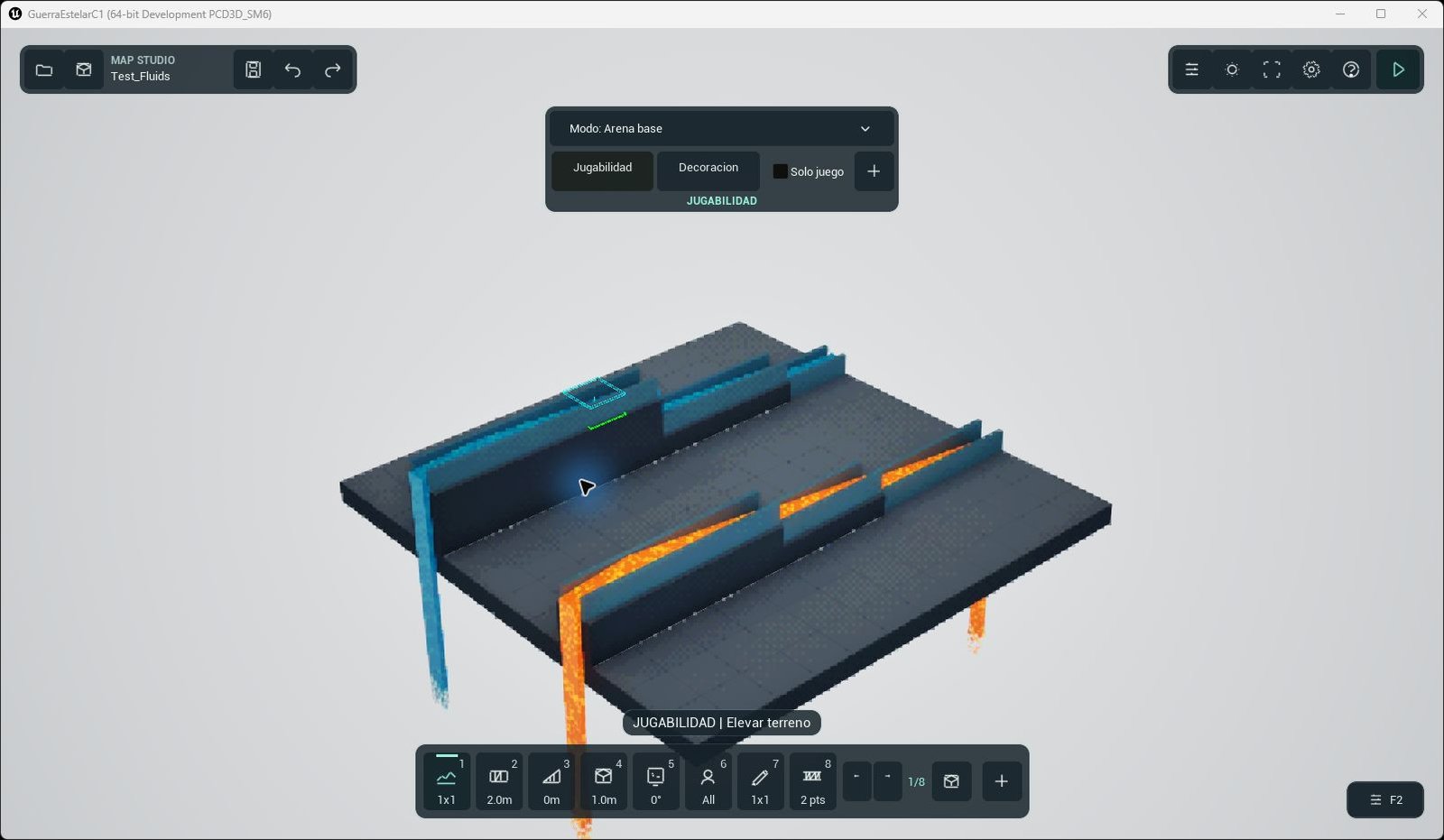
Water and lava follow separate test channels and fall beyond the map edge. Their visible falls end at a finite distance; they do not spawn an endless column below the arena.
Let fluids frame a route
Water and lava sources can feed bounded visual flows with cascades and falls. The flow respects traversal and representation budgets and ends when it drops into the void rather than becoming an infinite simulation. Fluids are visual-only in this prototype: they do not damage units, block movement, or become a second rules engine. A glowing channel can frame a bridge, but the crossing rule still comes from the authored endpoints.
For players, the result is atmosphere around a dependable board. For creators, it is a safe way to compare mood, lighting, pixel treatment, and fluid composition while keeping the tactical question in view. The prototype still uses placeholder art, so these systems help us test composition without claiming finished presentation.