Space Strats Devlog 01: Building Arenas with Clear Routes
How Space Strats turns a small grid into readable height, cover, and route decisions.
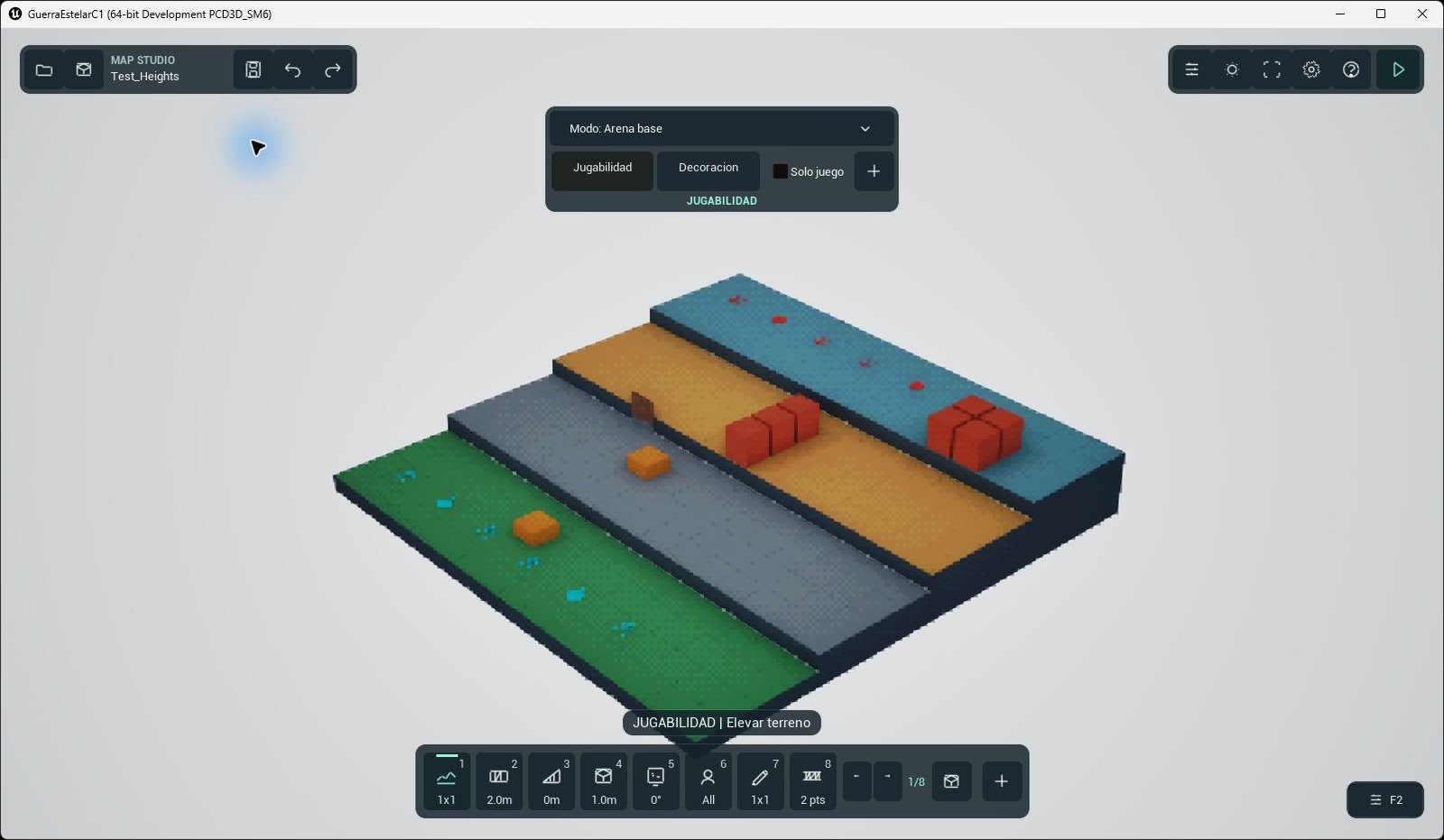
A test arena separates terrain materials, elevations and cover. The simple shapes make the construction rules visible. Captured in Unreal Engine, September 27, 2026; prototype art.
Project overview · Phase 01 / 06
Begin with one clear route
Imagine a creator laying four wedge cells in a row, climbing from level 0 to level 4, then meeting flat ground. Each wedge has an orientation and a base height; the creator sets those values as the route climbs. A player sees a route with a beginning, a crest, and a destination. That is the basic promise of Space Strats: a three-person Unreal tactical game whose creative arena builder turns geometry into decisions.
The grid keeps the decision concrete. Each cell is 200 centimetres wide, and each terrain level is 100 centimetres apart. That scale leaves room for lanes and cover while making a change in elevation intentional. A terrain brush can raise, lower, restore, or paint a cell with the available materials, including snow. Material belongs to terrain; theme and weather remain separate map choices. Painting the ground under a wall can change the wall’s visual contact with the surface without changing its occupancy or cover.
Use height to shape movement
A wedge ramp occupies one 200-by-200-centimetre cell and rises 100 centimetres toward its high side. R rotates that side and the wheel changes the base height. Placement validation checks the proposed edit against the map, while the preview helps the creator align neighbouring pieces. The ramp is terrain geometry, so it answers “where can I stand?” rather than introducing a second tactical floor.
Cover follows the same rule. Walls and obstacles can define exposure, health, and destructibility while their meshes remain replaceable presentation. The player gets a stable tactical meaning from the authored edge, even while the prototype still uses placeholder art.
Make crossings deliberate
A bridge is an endpoint-to-endpoint traversal with a simple deck. It answers “can I cross between these two edges?” It is not an elevated grid with intermediate stopping cells. The main construction language also has no hand ladders. Keeping that boundary visible prevents a bridge silhouette from promising movement rules the combat system does not provide.
Give the creator a fast recovery loop
Green and red previews expose a placement decision before it enters the arena. Undo and redo restore the complete map state, including connections and layers, so a risky route can be tried and removed in one step. The intent is a map where players can read terrain, cover, and crossings quickly, and creators can keep refining those choices without rebuilding the whole board.